
Independent Design Review Panel: securing planning approval for a Paragraph 84(e) home in rural Wiltshire

Updated: Sep 9
Project: Paragraph 84(e) Dwelling and Annexe
Location: Land Adjacent Falcon Cottage, Pincroft Lane, East Winterslow, Wiltshire, SP5 1BG
Architect: CaSA Architects
Planning Consultant: Hughes Planning
Landscape Architect: SEED Landscape Design
Local Planning Authority: Wiltshire Council
Design Review Panel Sessions: Three independent Design Review Panel reviews (including in-person and follow-up sessions)
Outcome: Planning Permission Granted under Delegated Powers (November 2025) reference : PL/2025/02747
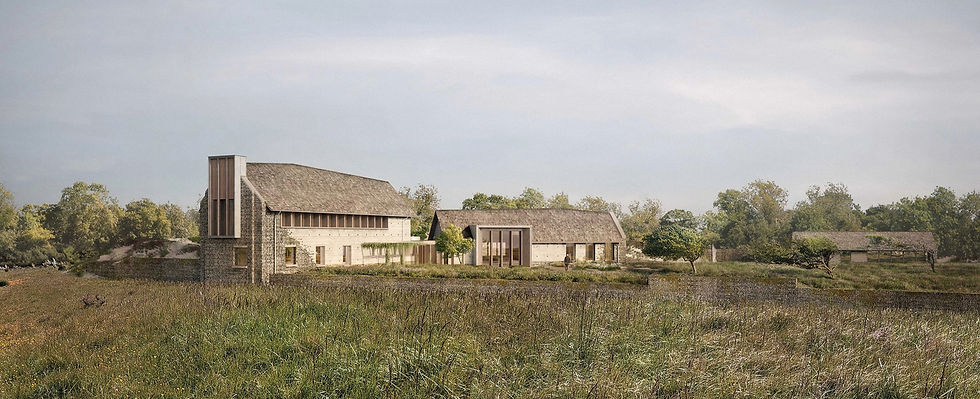
Securing planning permission for an isolated new home in the countryside remains one of the most demanding challenges within the English planning system. Paragraph 84(e) of the National Planning Policy Framework (NPPF) deliberately sets a very high bar, requiring proposals to be truly outstanding, to reflect the highest standards of architecture, and to significantly enhance their immediate setting while remaining sensitive to the defining characteristics of the local area.

In practice, achieving planning approval under Paragraph 84(e) is rarely about a single design moment. Instead, it is about process, evidence and credibility. Increasingly, local planning authorities and Planning Inspectors look for schemes to be tested through an Independent Design Review Panel, as part of demonstrating that the exceptional quality threshold has genuinely been met.
A recently approved dwelling near East Winterslow in Wiltshire provides a clear and instructive example of how engagement with The Design Review Panel can play a decisive and demonstrable role in securing planning permission under this demanding policy test.
The proposal, promoted by Hughes Planning and designed by CaSA Architects in conjunction with SEED Landscape Design, sought permission for a new dwelling and annexe of exceptional quality and design within open countryside. As is typical for Paragraph 84(e) schemes, the site lay outside any defined settlement boundary and, in principle, conflicted with the adopted development plan. Unless the exceptional design test could be robustly satisfied, the proposal would not have been supported.
From an early stage, the project team chose to engage with The Design Review Panel as part of the evolution of the scheme. Importantly, this engagement was not treated as a one-off or procedural exercise. Instead, the proposal was reviewed through three separate Design Review Panel sessions, allowing the design to be challenged, refined and strengthened as it developed.

The significance of this process is explicitly acknowledged within the Council’s delegated officer report, which confirms that:
“The scheme has been subject to 3 independent design panel reviews during its evolution and summaries of these positive assessments have also accompanied the application.”
This statement establishes the design review process as a material consideration in the planning decision, rather than a peripheral or informal exercise.
The officer report goes on to make clear that the scheme before the Council was the product of an iterative process, stating that:
“The design concept for the site; proposed dwelling; and its associated annexe, have undergone numerous iterations to get to the point of this formal application. The design has been critiqued at three stages by independent Design Panels which have resulted in the scheme now before us.”
This distinction is important. One of the recurring challenges with Paragraph 84 (e) proposals is demonstrating that architectural ambition has been rigorously tested, rather than simply asserted. The Design Review Panel sessions allowed the Panel to explore not only the architectural language of the proposal, but also the relationship between building, landscape, topography and setting.

Through this process, the design evolved into a more unified and resolved concept. The delegated officer report describes the final proposal as having an “imagined” evolution, explaining that the dwelling would have:
“layers of ‘history’ articulated by materials, with a medieval footprint; rising in a flint cobb base; with flint stonework feathering into a rammed chalk finish, reminiscent of the chalk cobb cottages prevalent in the nearby village of West Winterslow.”
Crucially, the officer did not simply recount the design narrative. The report directly quotes The Design Review Panel’s conclusions and explicitly aligns the Council’s own assessment with them. The officer states:
“Specifically, it is considered that the design is of exceptional quality, reflecting the highest standards in architecture and contributing to the general elevation of design standards in rural areas. Furthermore, the proposal significantly enhances its immediate setting and is sensitive to the defining characteristics of the local area.”
The weight given to the Design Review Panel is then made unambiguous, with the report concluding:
“The Council agrees with this conclusion and therefore considers that the proposals satisfy the provisions of Paragraphs 84 e) and 139 of the NPPF and can be accepted as an exception to the general policy of restraint in such a location.”
This explicit endorsement demonstrates that the findings of the Independent Design Review Panel were not merely noted, but were actively relied upon in the planning balance. Planning permission was subsequently granted under delegated powers in November 2025.
Reflecting on the outcome, Hughes Planning publicly acknowledged the role that design review played in securing permission. They commented:
“Hughes Planning are delighted to have secured permission for its 28th Para 84e house in the countryside of Wiltshire. The scheme was designed by CaSA Architects in conjunction with SEED Landscape Design.”
They went on to highlight the recognition given to design review within the decision itself, stating:
“Wiltshire Council approved planning permission under delegated powers in November 2025. Within their report, the Planning Officer recognised the design review process that had been undertaken by The Design Review Panel.”
Hughes Planning also emphasised the influence of the Panel on the evolution of the scheme, noting that:
“The Design Review Panel helped shape the landscape and architectural design of the house…”
They concluded with a clear endorsement of the value of independent design review:
“Hughes Planning and the Design Team would like to thank The Design Review Panel for its advice during the evolution of the design, which has undoubtedly resulted in a development of the highest architectural standards… and would not hesitate to recommend them to design teams.”
Taken together, this project provides a clear, evidence-based example of how an independent design review panel can play a meaningful role in supporting planning approval for Paragraph 84(e) proposals. The delegated officer report provides a transparent audit trail showing how the design evolved through multiple stages of review, how the Panel’s conclusions were quoted directly, and how those conclusions were endorsed by the local planning authority as part of the planning balance.
In an area of planning policy where scrutiny is high and expectations are exacting, this case reinforces the value of early, iterative and independent design review — not as a guarantee of permission, but as a constructive mechanism for improving design quality and providing decision-makers with the confidence to support genuinely exceptional schemes.

For architects, planning consultants and applicants pursuing isolated homes in the countryside, this Wiltshire project demonstrates that engagement with a Design Review Panel is increasingly not just good practice, but a critical component of a robust and credible planning strategy.
A clear and credible route to Paragraph 84(e) approval
The East Winterslow scheme demonstrates that independent design review can play a genuinely influential role in securing planning permission for isolated homes in the countryside. Through early, structured and iterative engagement with The Design Review Panel, the proposal was tested, refined and strengthened in a way that gave the local planning authority confidence that the exceptionally high bar set by Paragraph 84(e) of the NPPF had been met. The delegated officer report makes clear that the design review process was not incidental, but formed a material part of the planning balance, directly informing the conclusion that the scheme was of exceptional quality and worthy of support.
At The Design Review Panel, we remain committed to supporting better design outcomes across England through independent, impartial and expert review. Whether you are promoting a single dwelling in a sensitive rural location or a complex major development, engaging with the Panel early in the design process may significantly strengthen your proposal, improve design quality and provide decision-makers with the confidence needed to support high-quality, contextually appropriate s
Related Documents
For expert, impartial and independent design review panel services visit www.designreviewpanel.co.uk


Comments