
EVIDENCE & PLANNING APPEALS
Read what the Inspector
actually said.
Three published appeal decisions record how Inspectors treated independent design review feedback from The Design Review Panel. Each account separates what the decision says from what a project team might reasonably take from it. All three are linked in full.
Selected decisions, not a success-rate sample. All three were allowed with conditions. They are chosen to show how review evidence is handled; none of them establishes that design review secures planning permission.

01 · 21 NOVEMBER 2022
Mossie, Castle Camps
Local context, and the weight given to review findings.
Read the decision →

02 · 22 JANUARY 2018
The Knowle, Sidmouth
Design development on a 113-unit extra-care proposal.
Read the decision →
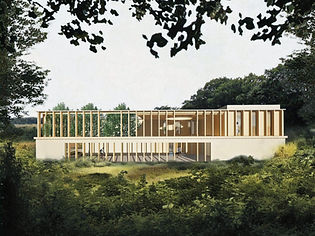
03 · 5 NOVEMBER 2025
Spilsby House, Ottery St Mary
Iterative review alongside the Inspector’s own assessment.
Read the decision →
Visualisations of the three proposals, published by The Design Review Panel. Mossie: Hawkes Architecture with Squires Young Landscape Architecture and Axiom Planning.
THE PATTERN
A record the decision-maker can actually use.
01
02
03
Conclusions in the test’s own terms
Where the Panel’s conclusions address the applicable policy test in its own language, officers and Inspectors have something they can engage with directly rather than paraphrase.
A development record that can be followed
Where what was reviewed, what was said and what changed are all on the file, the evolution of the design can be traced without inference.
Conclusions that go unrebutted
In one of these decisions the Inspector notes the council’s case offered no direct rebuttal of the Panel’s conclusions, and gives them greater weight as a result.
The Panel’s reading, not a rule. These are observations drawn from three decisions. Weight is for the decision-maker to apportion in every case, and none of this displaces the wider planning balance.
THE DECISIONS
Three cases, in the Inspector’s words.

The site entrance. The decision records that the Mosquito aircraft behind the design has particular local importance, having flown from the former airfield at Castle Camps. Visualisation, not a photograph. Hawkes Architecture with Squires Young Landscape Architecture and Axiom Planning.
01 · LOCAL CONTEXT AND WEIGHT
Mossie, Castle Camps
A proposed home at Olmstead Green, Cambridgeshire, following refusal by South Cambridgeshire District Council.
APPEAL
APP/W0530/W/22/3302832
DECISION
21 November 2022 · D Wallis
PASSAGES
Paragraphs 7–9
OUTCOME
Allowed with conditions
WHAT THE DECISION RECORDS
The appellant engaged The Design Review Panel on three occasions. The council objected that its own design enabling panel, with greater local knowledge, had not been used. The Inspector found there was sufficient understanding of the site’s characteristics and context in the appellant’s consultation documents for the Panel to be briefed on the local area and its history, and that the council’s case gave no direct rebuttal of the Panel’s conclusions.
“I give greater weight to the DRP findings as a result.”
Paragraph 9
THE PANEL’S READING
Briefing and reasoning appear to be what carried the point: the Panel had been given the local context, and the findings were left unanswered.
What it does not establish. A finding on this proposal and this evidence. It does not establish that a council’s own panel is biased, or that every external review attracts equivalent weight. The proposal was considered under paragraph 80(e) of the Framework then in force.

Visualisation published by The Design Review Panel.
02 · A major development, reviewed for the council
The Knowle, Sidmouth
A proposal for 113 extra-care units at The Knowle, Station Road, Devon.
APPEAL
APP/U1105/W/17/3177340
DECISION
22 January 2018 · Michael Boniface
PASSAGES
Paragraphs 9 and 19
OUTCOME
Allowed with conditions
WHAT THE DECISION RECORDS
The scheme was amended several times during the application, including in response to extensive comments from the Devon Design Review Panel, used by the council for professional advice on design matters. At paragraph 19 the Inspector concludes the proposal evolved through a thorough analysis of the site circumstances and would make a positive contribution to the character and appearance of the area.
“The proposed development has clearly evolved to take such views into account.”
Paragraph 9
THE PANEL’S READING
Here the review is commissioned by the authority rather than the applicant, which is one of the ways a Panel is used. It is an example of review informing a substantial scheme over time rather than settling a single question.
What it does not establish. The decision does not expressly assign “significant weight” to the Panel; its conclusions address the scheme and the wider planning issues. The decision uses the name Devon Design Review Panel; the contemporaneous project account identifies its connection to The Design Review Panel.

Spilsby House, Ottery St Mary
A new dwelling and landscaping on land adjacent to Upper Spilsby, Exeter Road, Ottery St Mary, Devon.
APPEAL
APP/U1105/W/25/3364929
DECISION
5 November 2025 · R Kent
PASSAGES
Paragraphs 22–24 and 41
OUTCOME
Allowed with conditions
Visualisation published by The Design Review Panel.
WHAT THE DECISION RECORDS
The proposal evolved through the council’s pre-application process, including consultation with the Panel on three separate occasions, with earlier feedback incorporated into the design. The Panel’s third set of comments concluded the scheme was truly outstanding, represented the highest standards of architecture and would significantly enhance its immediate setting. Council officers agreed it met the paragraph 84(e) test then applicable, and after his own assessment the Inspector found no reason to arrive at a different conclusion.
“The use of design review and early engagement with the Design Review Panel in the evolution of the scheme is encouraged by the Framework.”
Paragraph 22
THE PANEL’S READING
The Panel’s conclusions here are expressed in the terms of the policy test itself, which may be why officers and the Inspector could address them directly rather than restate them.
What it does not establish. Paragraph 41 gives significant weight to the exceptional design quality and sustainability benefits of the scheme. It does not assign that weight to the Panel’s feedback. The accompanying council officer report names The Design Review Panel. These records establish the appeal outcome, not completion of the building.
USING THESE DECISIONS
What a decision can, and cannot, tell you.
An appeal decision relates to its own proposal, its own evidence and the policy context of its date. Historical paragraph numbers belong to the framework in force at the time: the current National Planning Policy Framework was published on 17 August 2026 and is structured differently. A planning consultant can identify the policy and evidence relevant to a new proposal.
It is worth reading the whole decision, including the concerns and the conditions. Supportive design feedback is one part of the evidence before an Inspector. It does not bind the Inspector and it does not determine the wider planning balance.
National policy nonetheless expects design review to be used and its outcomes considered: the Framework published on 17 August 2026 requires local planning authorities to have access to design review, to encourage its appropriate use, and to take its outcomes into account, at policy DP4(2)(a).
PREPARING YOUR OWN EVIDENCE
Make the design’s development easy to follow.
For a project of your own, a useful record could connect three things.
01
02
03
The proposal reviewed
The date, the drawing revisions, the site information, and the questions put to the Panel.
The complete feedback
The issued report together with the material it considered, including the strengths expressed and the concerns raised.
The team’s response
The resulting changes, and the reasoning where the team takes a different approach. It helps to distinguish the reviewed design from any subsequent revisions.
Review tends to be most useful while the design still has room to develop. Explore the timing and the process →
EXPLORE FURTHER
Why independence matters
The safeguards behind a credible, constructive review.
See the safeguards →
Exceptional rural homes
Architecture, landscape and the wider setting in one conversation.
See the approach →
Projects & map
The wider record of project types and stages across England.
Explore projects →